Could AI help us find people after a disaster?
August 13, 2026 · 6 min read
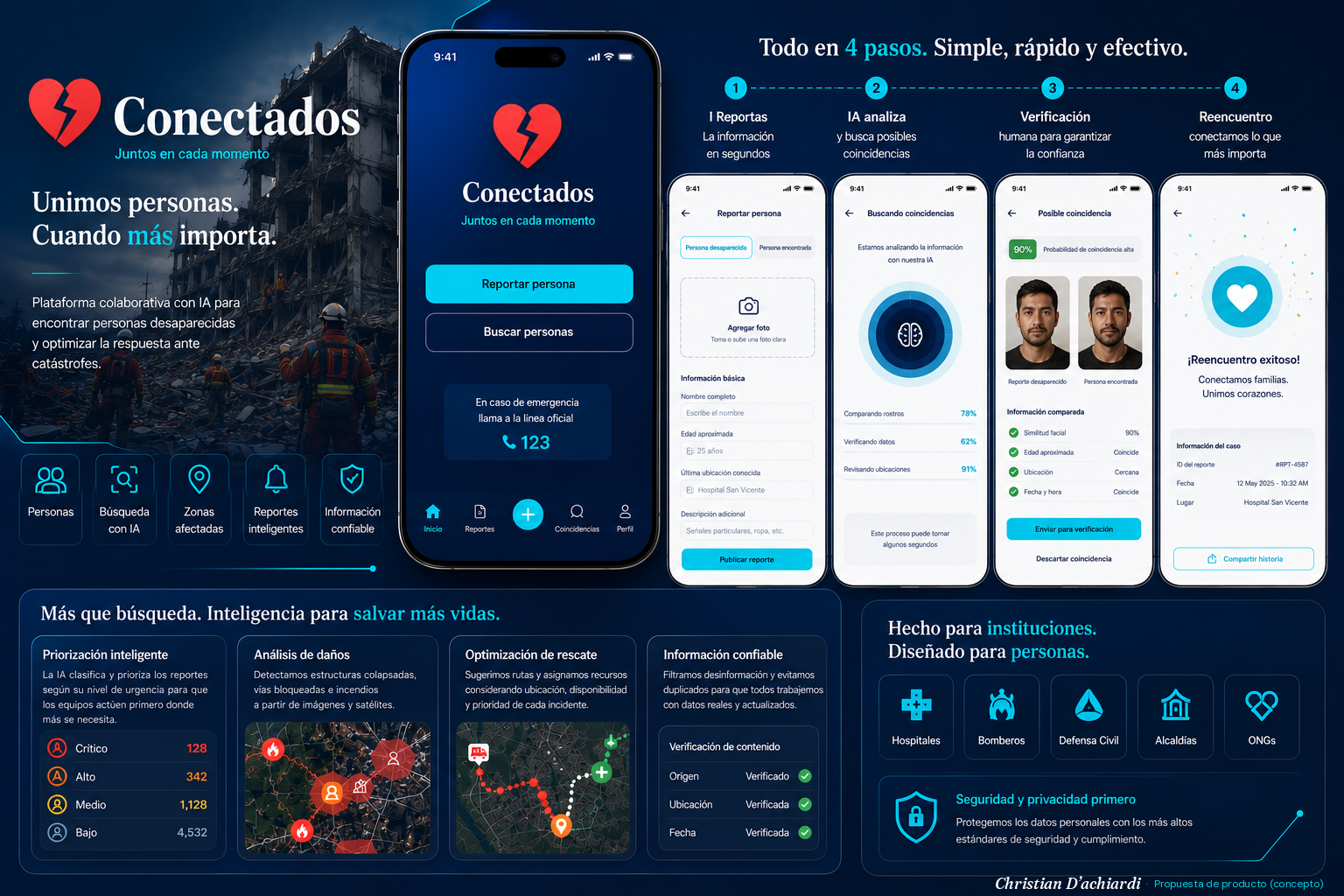
The earthquake we Colombians just went through has shown, once again, that we're a country that comes together. It might sound like a cliché — in disasters everywhere, every community draws on some instinct for survival and solidarity — but culturally, we carry a particular kind of warmth, heightened by a tendency to release our emotions without holding back. It's part of why we're so often called one of the happiest countries in the world.
Those emotions aren't always happy ones. We simply are what we feel. When we're happy, we dance, we laugh, we celebrate. When we're upset, we shout, we offend, and sometimes we even come to blows. And when we're hurting, we simply cry — and act.
We're human by nature, and that often means setting rationality aside and letting our senses take over.
That same human side is exactly what has made us so fragile in this moment — and, at the same time, what has turned us into people who act.
From Medellín, I was a witness to that tragedy, and even though this part of the country wasn't directly affected, I could feel the ground move, hear the sound of buildings, sense the anguish and nervousness in the community, and the desperation to know whether our loved ones were safe.
Given the scale of what this part of the country experienced, it's not hard to imagine what the actual victims of this catastrophe must have felt.
That's where, as someone who lived through even a fraction of that tragedy, and as a Colombian, I spent hours — using what I know — watching videos, trying to understand the seismic events, following the numbers, and, from my own profession, looking for some way to help.
Between newscasts, social media, and other outlets, I noticed a pattern: missing people, families desperately searching for someone among the rubble or in hospitals.
My first instinct was to build an MVP aimed at helping reunite people with their families.
The system would be simple, but it could work: centralize every report through an intuitive, easy-to-use interface, where hospitals and different aid centers could immediately upload photos of unaccompanied people arriving, along with their basic information.
On the other side, families could register their missing loved ones, and AI could speed up the search across the database — running facial recognition against the registered faces, surfacing possible matches, and presenting them for human verification.
But as I kept thinking about the idea, I started asking myself how far this technology could actually go in a scenario like this. AI wouldn't have to stop at facial recognition. It could help classify and prioritize the thousands of reports that come in during a catastrophe, spot people trapped, fires, collapsed structures, or blocked roads in photos and videos, and analyze imagery to identify the hardest-hit areas. It could even combine incident locations, road conditions, and the availability of ambulances, hospitals, and rescue teams to help suggest where resources should go first.
In a scenario where thousands of reports can arrive simultaneously from different sources, maybe the real value of AI isn't just in finding an answer — it's in turning an overwhelming flood of information into something prioritized and actionable for the people who have to make decisions.
A system like this could probably keep expanding — adding affected zones, buildings pending inspection, and plenty of other variables. But the core focus would stay the same: easing people's anguish and helping the people trying to respond to the tragedy.
Given how relatively simple it seemed, I thought about building it. But somewhere in my own reasoning, another question came up — and it's the reason I decided to write about the idea instead of building it.
By the time a tool like this could actually be built and deployed, most of the missing people would likely already have been found or accounted for through other means. Which raises an unavoidable question: why build a solution once most of the victims have already been identified or located?
And even though a tool like this probably wouldn't be effective enough to solve the problem in that exact moment, it could still have done something different: eased the anguish, centralized the information, and made the search easier during those first hours, when uncertainty feels endless.
Still, thinking about future disasters, I believe a tool like this could genuinely help.
But that's what led me to understand something far more important: for a product like this to actually be viable, it would need to exist in partnership with governments and institutions.
Media outlets, hospitals, relief organizations, and other entities would need to promote and adopt the tool for it to actually become a shared, universal, trustworthy system for society.
“Because maybe the problem isn't building the technology. Maybe the real problem is making sure that, when we need it most, we're all connected.”
Also available in
Leer en español